



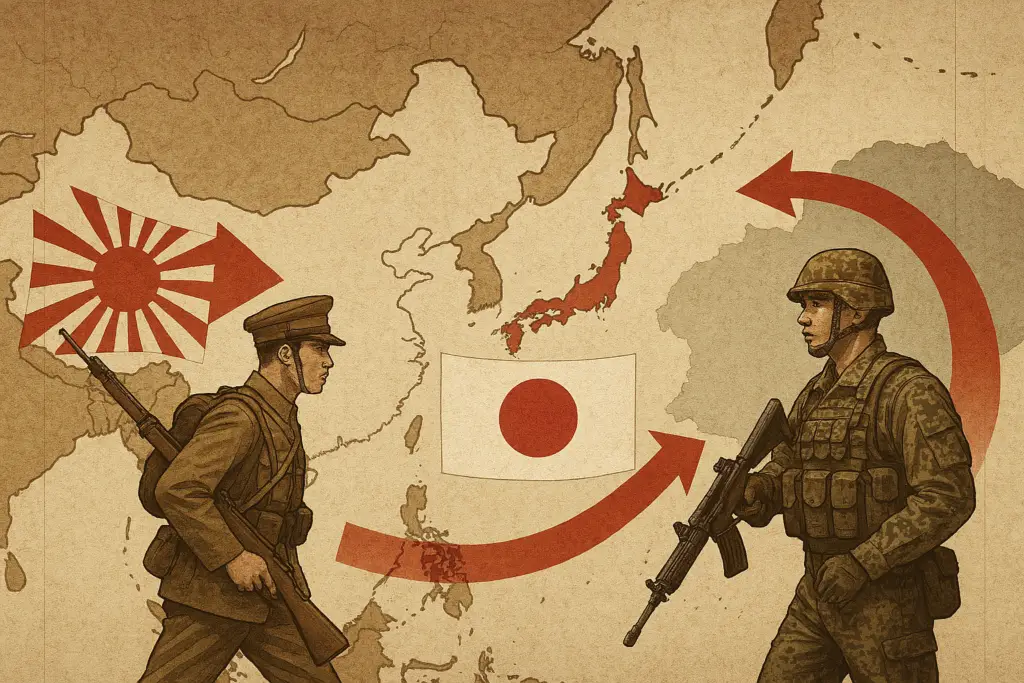
Japan occupies a unique place in the Indian imagination. For many, it is first encountered through manga, anime, technology, and disciplined modernity. Yet beneath this cultural familiarity lies a far more complex historical trajectory shaped by imperial ambition, devastating defeat, enforced pacifism and now a cautious but visible return to military assertiveness. Japan’s strategic evolution is inseparable from its own past and from the shifting balance of power in the Indo-Pacific region, particularly the rise of China.
Japan’s transformation began in the nineteenth century with the “Meiji Restoration”. Confronted with Western imperial dominance and aware of its technological backwardness, Japan chose rapid industrialisation and state led modernisation. Military strength was seen as essential to survival. This period also witnessed the Anglo Japanese Alliance, which legitimised Japan as a rising power and encouraged outward expansion. By the early twentieth century, Japan had built a vast empire across East Asia, driven by resource needs, strong nationalism and a belief in its civilisational mission.
This imperial phase culminated in the Second World War and left deep scars across Asia, especially in China. The atrocities committed during the Japanese occupation, most infamously the Nanking Massacre, remain central to Chinese historical memory and political narratives. It is important to note that Japan’s surrender in China occurred at a time when the Chinese Communist Party(CCP) was not yet in power. The primary resistance against Japan was led by the Nationalist government(Kuomintang), which later lost the Chinese civil war to the Communists and retreated to Taiwan. The post war narrative promoted by Beijing that the Communists alone liberated China from Japanese rule remains contested by historians, which is just only one side of truth presented and wrapped under propaganda.
Japan’s defeat in 1945 marked a civilisational rupture. Under Allied occupation, largely shaped by the vision of General Douglas MacArthur of US Army, Japan underwent comprehensive demilitarisation. The new constitution, particularly Article 9, renounced war as a sovereign right and prohibited the maintenance of armed forces for offensive purposes. Japanese society was consciously reoriented away from militarism, creating a pacifist identity that stood in complete contrast to its pre 1945 ethos.
Yet this pacifism was never absolute. “The 1960 US Japan Treaty of Security and Mutual Cooperation”, fundamentally altered Japan’s strategic posture. While Japan remained constitutionally pacifist, its security was effectively outsourced to the United States. American bases across Japan became pillars of US power projection in Asia, and Japan emerged as a frontline state against communism during the Cold War. In this period, Japan was perceived by Washington as a bulwark against the Soviet Union and later against communist influence more broadly in Asia. The treaty also included the clause of U.S. “nuclear umbrella” to protect the Japanese archipelago in case of any attack during war. The treaty also allowed to give US a free nod to open bases and station its troops in Okinawa which is a major site of U.S. military bases. As of currently, U.S. has now roughly 128 bases and 50,000 tri-service personnel stationed on Japanese soil.
Economically, Japan experienced extraordinary growth during the Cold War, becoming the world’s second largest economy. However, the end of the Cold War coincided with internal stagnation. The 1990s and early 2000s are remembered as the “Lost Decade”, characterised by deflation, weak growth and structural rigidity. During the same period, China embarked on rapid economic expansion and eventually surpassed Japan economically. This shift profoundly altered regional perceptions of power.
As China’s economy grew, so did its military ambitions. Beijing’s vision of national rejuvenation increasingly included regional dominance. For Japan, this revival of Chinese power reopened unresolved historical and strategic anxieties. Territorial disputes over the Senkaku or Diaoyudao islands became focal points of tension. Repeated incursions by Chinese coast guard and naval vessels into waters administered by Japan, violations of Japanese airspace by the People’s Liberation Army Air Force(PLAAF) and the presence of illegal Chinese fishing fleets sharpened security concerns in Tokyo. As of countermeasures, Japan has directed its Coast Guard and JMSDF to assess the situation and to deter any situation in case of violation of its territorial waters.
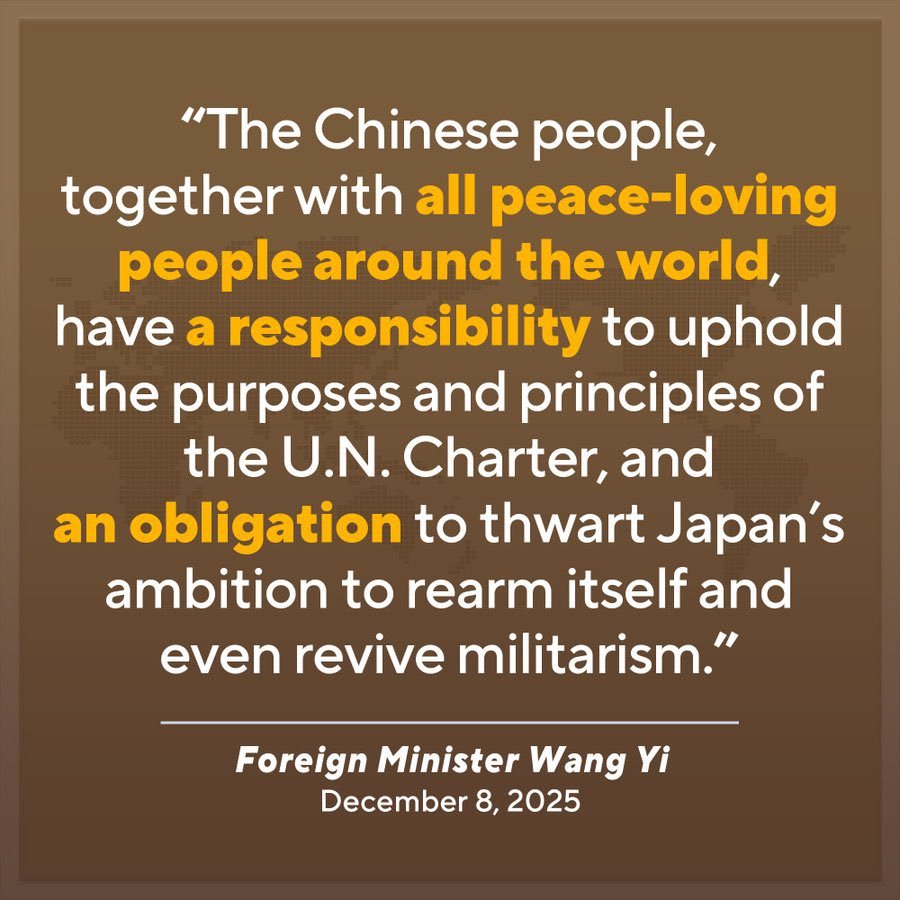
The relationship deteriorated further in the twenty first century as military signaling replaced diplomatic restraint. Chinese officials including Foreign Minister Wang Yi issued unusually harsh warnings to Japan over Taiwan and regional alignment. Statements from the Chinese foreign ministry warned Japan not to interfere in what Beijing calls internal matters and suggested that those who played with fire would face devastating consequences. Such language marked a significant escalation in tone and underscored how sensitive the Taiwan issue had become.
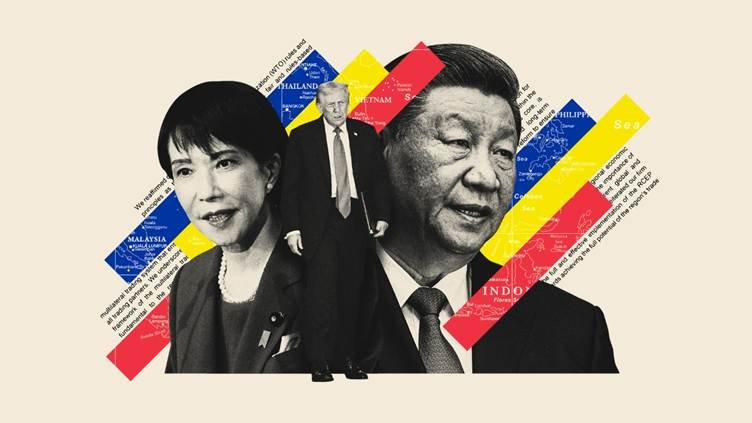
Japan’s domestic politics also evolved. After the assassination of former PM Shinzo Abe, the Liberal Democratic Party(LDP) faced leadership uncertainty even as national security debates intensified- including former top leaders- Kishida and Ishiba after their govt failed to function properly due to low leadership approval among the LDP’s top brass and across the country. Figures such as Sanae Takaichi emerged with openly strong nationalist positions, challenging decades of strategic ambiguity following the footsteps of her former mentor Shinzo Abe. Her statement that Taiwan’s security is directly linked to Japan’s survival signalled a fundamental shift in Japanese strategic thinking and provoked strong reactions from Beijing. Chinese officials responded with unusually abusive rhetoric directed at Japan’s leadership, reflecting how deeply the Taiwan question intersects with regional power struggles.
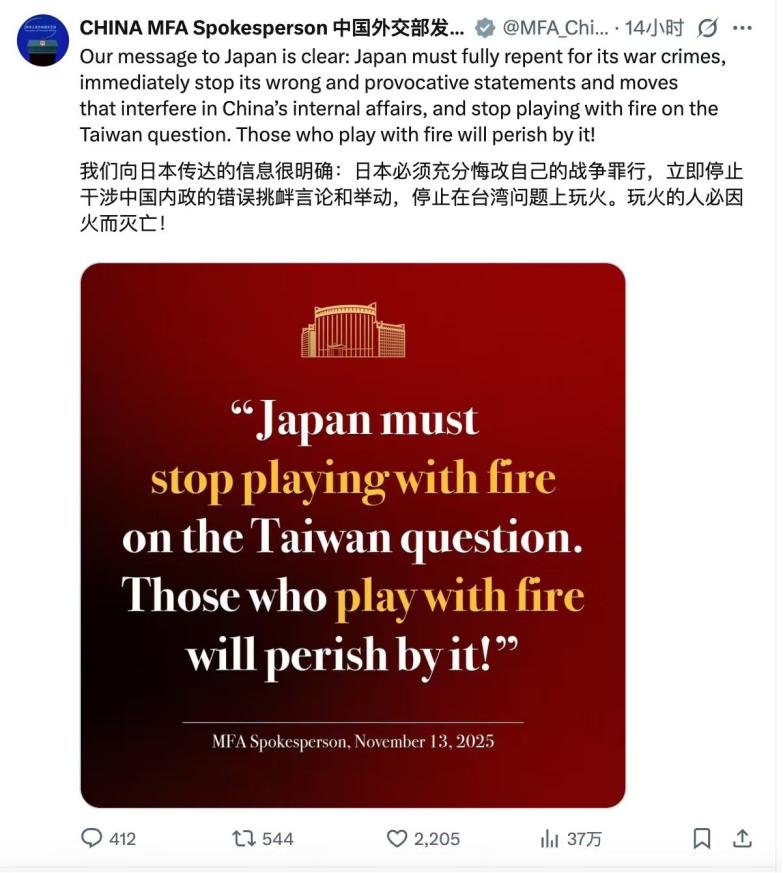
The Taiwan issue reached a new level during the visit of US Speaker Nancy Pelosi in 2022. China responded by launching multiple ballistic missiles during military exercises. Several of these missiles fell within Japan’s exclusive economic zone, triggering strong diplomatic protests from Tokyo. For Japan, this was not an abstract crisis but a direct demonstration of vulnerability and proximity to potential conflict.
The United States continues to play a decisive role in moderating and shaping Japan’s responses. Former President Donald Trump reportedly engaged both Xi Jinping and the Japanese Prime Minister in conversations aimed at slowing escalation over Taiwan, reflecting Washington’s dual role as Japan’s security guarantor and as a manager of great power competition.
At the same time, Japan has diversified its strategic partnerships. Its relationship with India has deepened significantly through the Quad framework and the 2+2 dialogue. Military cooperation has expanded in ways previously unthinkable. Japan’s willingness to provide advanced technologies such as the Unicorn stealth antenna for Indian warships is particularly notable given its historically strict export controls on defence equipment. This signals Japan’s readiness to play a more active role in regional security networks. Japan has also signalled to cooperate with India at highest levels through strategic military partnership apart from QUAD, displaying its interest and eagerness to co-develop and co-produce military platforms and defence systems.
Japan’s gradual military normalisation does not represent a return to imperial aggression but rather an adaptation to an increasingly unstable environment. Constitutional reinterpretations, increased defence spending and closer alignment with like minded democracies reflect a recalibration rather than a rejection of pacifism. The legacy of Meiji era industrialisation, wartime expansion, post war demilitarisation and Cold War dependency all converge in today’s strategic debates. U.S. change in its posture to support and continue this long standing defence partnership has also forced Japan to review its doctrine and amend it for its own security.
Japan’s evolution from imperial power to pacifist state and now to a cautious security actor illustrates how history continues to shape contemporary geopolitics. In the Indo Pacific, where memories of empire, unresolved civil wars and rising ambitions collide, Japan’s choices will remain central to regional stability. Its challenge lies in balancing historical responsibility with present necessity, and constitutional ideals with an increasingly unforgiving strategic reality.
What’s New?- Japan passed a record military budget of $58 billion for next financial year…
On December 26, Japan’s cabinet under leadership of PM Takaichi passed a record budget for defence $58 billion for the forthcoming fiscal year, focusing on military preparedness and strong buildup of tri-services to tackle the China threat in an event of war. Japan has also set target to double its defence spending in next five years to about 2% of its GDP after encouraged by U.S.. It focuses on 7 pillars which will be the cornerstone for Japan’s evolving military doctrine and security policy against threat. These pillars are as follows:-
- Standoff Defence Capabilities
- Comprehensive Air and Missile Defence
- Unmanned Asset Defence
- Cross- Domain Operational Capabilities
- Command, Control and Intelligence Trivia
- Manoeuvring and Deployment
- Sustainability and Resilience
Japan’s S.H.I.E.L.D. Program
A layered coastal defence system (Synchronize, Hybrid, Integrated and Enhanced Littoral Defence) with a program cost of $640 million has been proposed in the new presented budget covering air, land, marine and unmanned theatre and functioning as fully synchronized manner focusing on protection of small islands of Japan centered around territorial disputes mainly with China and North Korea.
Japan also tested the enhanced version of its Type-12 anti-ship missile defense system with a range of 1000kms with a cost of $1.13 billion out of $6.2 billion for overall missile capacity buildup. Japan is also a part of GCAP(Global Combat Air Program) known as Tempest with United Kingdom and Italy in a trilateral arrangement to develop the 6th generation fighter jet equipped with cutting edge technologies like AI along with team-up with unmanned systems. Many other nations showed their interest to acquire the platform, also all three of them invited India to join the program as an Observer later as a member to strengthen the partnership and leveraging India’s talent in some of the technologies. The sharp increase in investments in the military reveals a change in Japan’s Strategic security evolution from pacifism to military assertiveness in the Indo-Pacific.