

On 22 June 2025, the United States conducted Operation Midnight Hammer, a targeted military strike against Iran’s nuclear infrastructure. According to assessments by the Pentagon, the operation is estimated to have delayed Iran’s nuclear program by approximately two to three years. Although the strike constituted a substantial technological and strategic setback, it did not result in political destabilization within Iran. The leadership of Supreme Leader Ayatollah Ali Khamenei remained intact, underscoring the Iranian regime’s institutional resilience and its capacity to withstand external military pressure without experiencing immediate internal collapse.
The unrest in January 2026
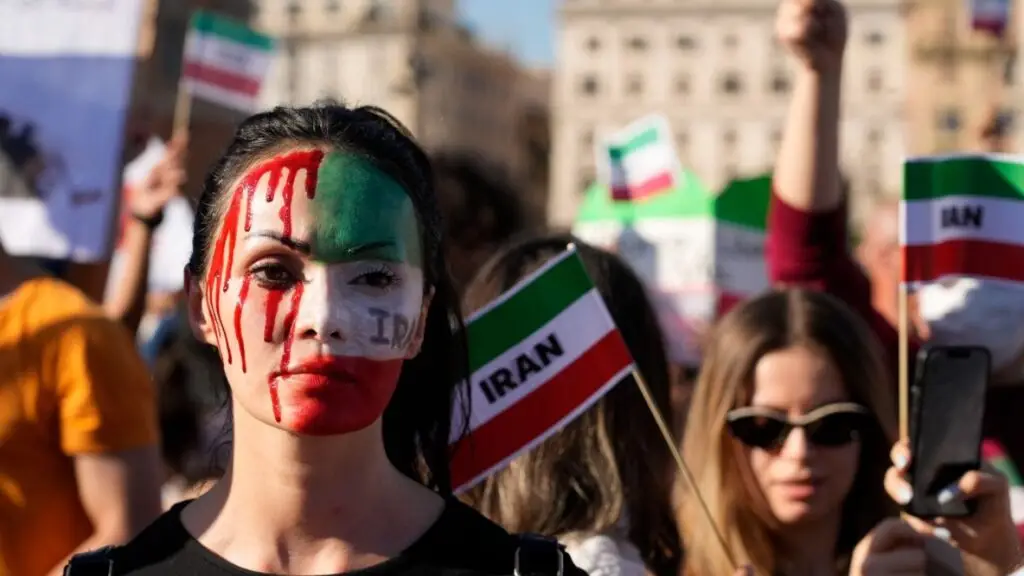
Social media activity rose sharply across platforms such as Truth Social, X, and Instagram. Much of the content, reportedly aligned with Israeli and U.S. narratives, criticized Iran’s Supreme Leader, Ayatollah Khamenei, while highlighting ongoing challenges such as power outages and economic hardship in Iran. At the same time, Telegram reports which backs Iran, indicated that several individuals involved in riots against the Iranian regime had been identified and arrested. Some of those detained were allegedly in possession of weapons, including G3 and Colt rifles. These findings suggest a level of prior coordination and indicate an attempt to intensify unrest by targeting military and police facilities, with the potential to spark wider civil conflict. In response, the Islamic Revolutionary Guard Corps (IRGC) acted swiftly by imposing curfews, carrying out arrests, and enforcing internet blackouts. These measures effectively limited public mobilization and reduced the narrative influence of external actors.
Why regime change efforts have failed to produce desired outcomes in Iran?
The efforts have been limited in their effectiveness due to structural, ideological, and societal factors that reduce the political impact of economic pressure and social unrest. Despite significant economic hardship resulting from U.S. sanctions, efforts to encourage regime change from within have encountered substantial constraints. The Iranian leadership has framed the U.S.-Israel alliance as an existential civilizational threat, reinforcing Islamic nationalist and Shi’a religious narratives that hold resonance within Iranian society and the broader South Asian and global Shi’a communities. Religious education, which is an institutionalized and integral component of Iranian society from an early age, reinforces these narratives by linking political authority with religious duty and collective historical memories of resistance and martyrdom. This ideological embedding constrains the capacity of external pressures to convert economic grievances into organized and sustained internal opposition, despite ongoing public dissatisfaction and episodic unrests.
Why there are still no American “Boots on the Ground” in Iran?
Any attempt by the United States to carry out a targeted action against Iran’s Supreme Leader, Ayatollah Ali Khamenei, similar to alleged kidnapping efforts associated with Nicolás Maduro, would be high-risk. Such an action could easily lead to serious regional instability, wider conflict, and increased radicalization across parts of the Muslim world globally. The UAE, Saudi Arabia, Qatar, and Bahrain are key U.S. allies in the Middle East and host American forces and critical oil and energy infrastructure. Iran possesses ballistic and cruise missiles capable of striking these Gulf states, and its military doctrine emphasizes retaliation against U.S. bases and allied strategic assets in a conflict. In the event of a full-scale war with Iran, these allies and their infrastructure would also face serious risks and consequences. The global information environment makes this situation more complex. Media and political networks linked to countries such as Türkiye and Pakistan have, at times, spread narratives of Muslim vulnerability and political powerlessness. In this context, even highly educated individuals may interpret violence as martyrdom, while the international community views the same actions as terrorism. This gap reflects the complex relationship between religion, politics and ideas of freedom in Iran and increases the risk of external actors misunderstanding local realities. Iran’s geography also creates major practical obstacles. The country is large, mountainous, and heavily urbanized, with tightly controlled borders and airspace. However, airstrikes are a better option. These geographic factors, combined with a strong internal security system, make operations difficult and increase the risk of unintended escalation specially when Russia-China nexus is in close proximity. Internal collapse seems difficult.
Overall, Iran has shown strong resilience to sustained external pressure. Although sanctions and unrest have had measurable effects, the regime’s stability remains intact. Internal dissent is contained through State coercion and ideological religious cohesion which also translates transnationally. Consequently, Iran’s domestic control and geopolitical calculations make regime change unlikely in the near term but uncertainties prevail.
How does this affect India ?
The evolving geopolitics in the region could have significant implications. India’s strategic asset, Chabahar Port in Iran, may face operational challenges, potentially affecting trade and strategic connectivity amid broader destabilization in the region. If Iran’s current regime were to collapse or the country descended into prolonged political and economic turmoil, India would face significant hardships around its Chabahar port project because it is central to India’s plan to access Afghanistan and Central Asia while avoiding Pakistan, so instability in Iran could disrupt customs and logistics operations, delay or halt the ongoing expansion of the port and its rail links, and slow cargo movements along the International North‑South Transport Corridor (INSTC), forcing longer, costlier alternative routes and raising freight costs. Turmoil could also complicate India’s existing investments, which are already exposed to potential sanctions risk after the U.S. revoked a key waiver for Chabahar, creating legal and financial challenges for Indian operators and deterring international financing, insurance, and trade partnerships. Beyond economic concerns, such instability would weaken India’s diplomatic leverage, limit its strategic options, and reduce influence in Afghan reconstruction and Central Asian trade networks, potentially shifting the regional balance toward China and Pakistan’s Gwadar corridor.
Simultaneously, there is a risk of rising terrorism and radicalization with regional actors potentially promoting Hinduphobic along with anti-Semitic, anti-West narratives. India thus occupies a complex “grey zone,” where strategic, regional and internal security dynamics intersect.