

The Cold rivalry in a bipolar world was all about the Iron Curtain that divided world governments into endorsing either capitalist or communist blocs. Upheavals of governments, sabotage, spy networks, wars, and suspicions defined that era
After the collapse of the USSR in 1991, the United States became the global hegemon, and the world turned unipolar for a long time.
After that for years, the West sat on the intellectual pedestal, having completely transformed from an industrial, traditional economy to a knowledge economy, where research and development took place, while manufacturing and labour work shifted to the East in Asia, through the process of globalization, with production supply chains located far away from innovation labs in U.S and Europe.
As a result, China initially emerged as a producer of low-cost, small consumer goods and became widely known in the 1980s and 1990s for the prevalence of counterfeit and imitation products, often sold under distorted brand names such as “Abibas” instead of “Adidas.”
Over time, supported by state-led industrial policies, low labor costs, and integration into global supply chains, China evolved into the world’s largest center for mass manufacturing, earning the widely accepted designation of the “manufacturing hub of the world.”
Now after several year, the Chinese pockets run deep, so does the desire to surpass the West. China has meticulously planned its economy and invested heavily in higher education, driven by research and development in science, technology, engineering, and mathematics. While earlier China primarily provided production labor for the world, it now possesses its own intellectual capital.
However, the geography of mainland China places it at the far edge of its global markets. Like the last shop in the market yet totally worth it.
In such a situation, an unhindered route and free navigation through international waters is very essential. However, along the South China Sea route, multiple states such as the Philippines and Vietnam assert overlapping maritime territorial claims. As a result, China’s heavy dependence both for its export-oriented economy and for domestic energy supplies (oil and fuel) on the maritime route linking the South China Sea, the Strait of Malacca, the Indian Ocean, the Strait of Hormuz, and the Suez Canal exposes its trade and energy flows to severe strategic vulnerability.
In this dire situation, Beijing requires alternative transit routes to navigate the seas through which it exports its “Made in PRC” products in exchange for vast revenues that translate into global influence. The China-Pakistan Economic Corridor (CPEC) is one such route, often celebrated by Pakistan as providing “strategic depth.” In practice, however, it primarily serves Chinese interests and has raised serious concerns about the erosion of Pakistani sovereignty. The problem for China does not end here, CPEC project activities in Shaksgam Valley, a territory that Pakistan ceded to China under the 1963 agreement are regarded as illegal by India, which does not recognize it, as the region forms part of the larger Kashmir territory that belongs to India and is under Pakistan’s illegitimate control.
The ambitious Chinese CPEC project, begins in Kashgar in Xinjiang region and runs along the Karakoram Highway through Gilgit-Baltistan, with multiple eastern, western, and central routes terminating at Gwadar port in Baluchistan province on the Arabian Sea, all along this route faces significant security challenges. Although CPEC is operational, it has not reached its full potential, as major segments of the project remain underdeveloped.
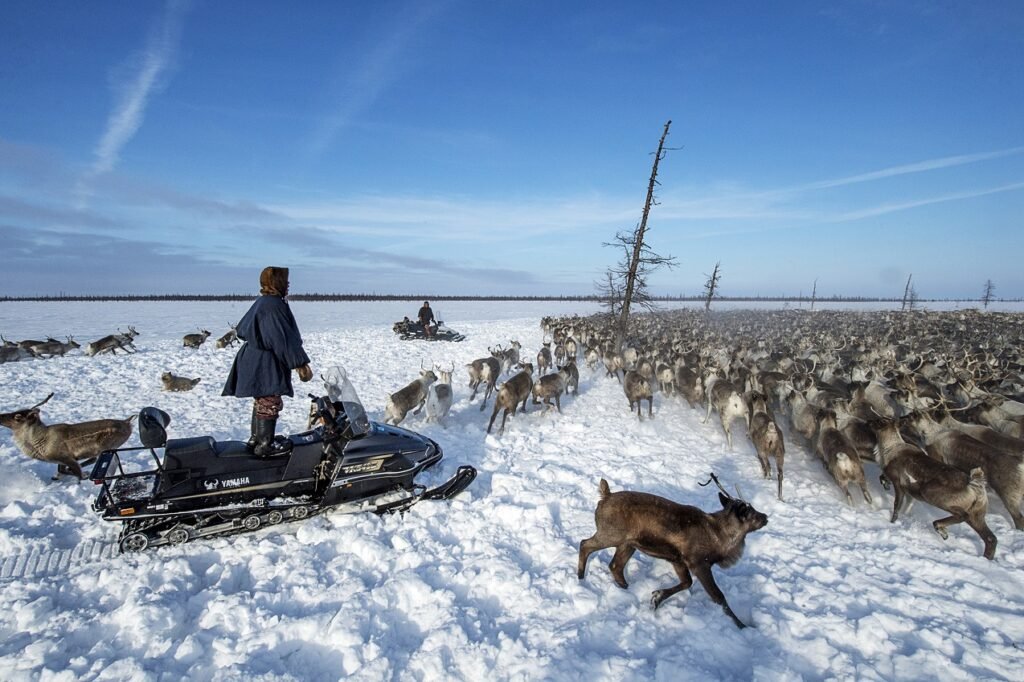
Therefore, the alternative Arctic routes presents a strategic opportunity. A substantial portion of the Arctic maritime route particularly the Northern Sea Route is bordered by Russia, a close strategic partner of China.
The remaining Arctic region is bordered by Canada, Greenland (under Danish sovereignty), a small section of Norway, and Alaska in the United States, making the Arctic a geopolitically sensitive but potentially viable alternative transit corridor for China.
Here too China’s Arctic policy, formally outlined in its 2018 Arctic Policy White Paper, defines China as a “near-Arctic state” with interests in the polar region. The policy emphasizes respect for international law, particularly the UN Convention on the Law of the Sea (UNCLOS), while advocating freedom of navigation, scientific research, environmental protection, and sustainable development. Strategically, China seeks to participate in Arctic governance, invest in infrastructure and energy projects, and develop Arctic shipping routes most notably the Polar Silk Road as an extension of the Belt and Road Initiative, aiming to reduce dependence on traditional maritime chokepoints and enhance long-term economic and strategic security.
No doubts, the Chinese dream of a new safe transit road again meets a great challenge, President Donald Trump, who wants to acquire Greenland, whether NATO likes it or not, as Greenland is a territory of Denmark, a NATO ally. The transition of the world from unipolar to multipolarity comes with a lot of blockades for China and her cargos. Whether it’s the Suez Canal, CPEC, or the Arctic, on every transit route China somehow meets some blockades often influenced by United State’s strategic interests.