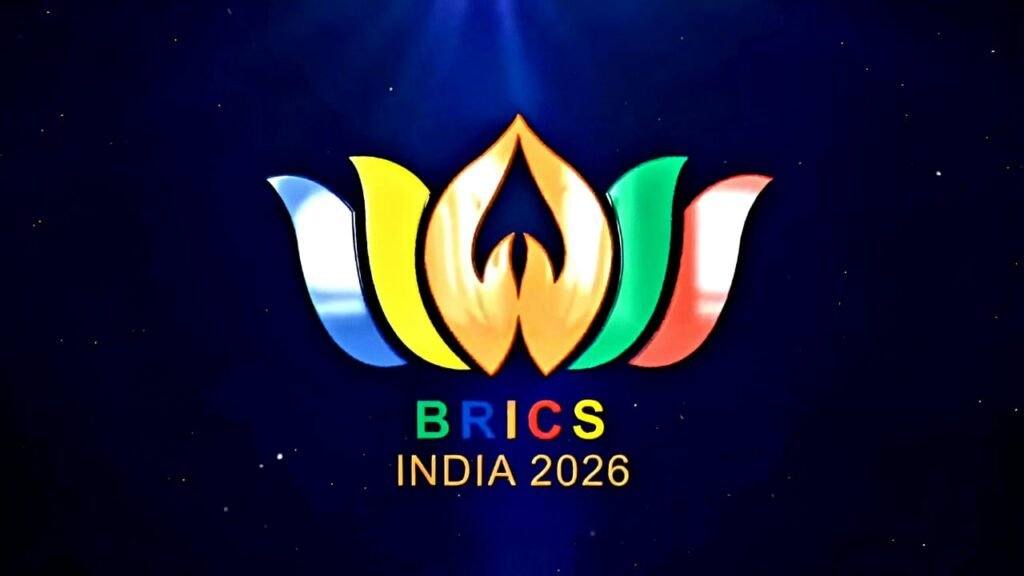
India joined the BRICS grouping in 2009, reflecting its commitment to strengthening cooperation among emerging economies and reducing structural imbalances in the global order. As a developing nation, India possesses wide ranging opportunities across sectors such as finance, energy, infrastructure, education, entrepreneurship, and innovation. Its large and skilled human capital provides a strong foundation for economic expansion and global engagement. Through BRICS, India gains access to development finance, technological collaboration, and alternative economic partnerships that support inclusive growth. Recent global events have demonstrated the risks of excessive dependence on a single State or supplier. When countries rely heavily on one source for critical goods or resources, they expose themselves to economic disruptions and strategic pressure. For instance, supply chain interruptions during the COVID nineteen pandemic revealed how overconcentration in manufacturing hubs can affect global production and trade. Similarly, energy dependence in certain regions has led to economic instability when geopolitical tensions disrupted supply flows. In the contemporary post Cold War and post truth international system, realism continues to shape state behaviour. Power, security, and national interest often take precedence over moral or ideological considerations. Under such circumstances, unequal dependencies can weaken a state’s autonomy, undermine its sovereignty, and negatively affect long term economic resilience. As many states increasingly function as middle powers, particularly in Asia, Africa, and Latin America, multilateral platforms such as BRICS play a crucial role. These groupings allow countries to diversify partnerships, reduce vulnerabilities arising from unilateral dependence, and collectively respond to global challenges while preserving their economic and political interests. India is a developing country with substantial scope for investment and economic growth. European countries have increasingly partnered with India, recognizing that diversification is essential, much like an investment portfolio that spreads capital across mid cap and large cap companies to hedge against shocks. Supply chain diversification and new strategic partnerships have become key topics of discourse among policy making elites. Historically, American liberalism and limited state governance rooted in the ideas of John Locke and Adam Smith created an environment that enabled the rise of powerful industrialists during the American Gilded Age. These industrialists invested heavily in new technologies, for example, J P Morgan played a major role in financing and consolidating the American electrical industry, including the reorganization of Thomas Edison’s enterprises into what later became General Electric. This is one illustrative case. More broadly, American economic development was shaped by principles of limited government and classical liberal economic thought. After globalization, global markets shifted significantly, with a large share of manufacturing relocating to China due to lower labour costs, export oriented policies, and the creation of ‘Special Economic Zones’ such as Shenzhen. Cities such as Hangzhou emerged as major innovation and technology hubs, while Wuhan gained importance later as an inland industrial center. Western financial institutions such as BlackRock, Vanguard, and JPMorgan increased their exposure to the Chinese economy mainly through portfolio investments, asset management activities, and the inclusion of Chinese stocks and bonds in global indices, rather than through direct ownership or control of firms. Although China is officially a socialist market economy, meaning it combines market mechanisms with state control, corporate power remains constrained by strong government and Communist Party oversight, especially in strategic sectors dominated by state owned enterprises. As a result, individual corporations in China, whether domestic or foreign invested, are not as institutionally or politically powerful as corporations in the United States, where firms operate with greater autonomy and exert stronger influence over markets and policy. India is a mixed economy and the most vocal calls for deeper liberalisation often emerge from Tier One cities where major entrepreneurs and corporate headquarters are concentrated. However India’s economic trajectory is fundamentally different from a conventional capitalist narrative. India’s development model has historically sought to balance market oriented reforms with social stability and state intervention for social justice. At the sub national level particularly in industrially advanced states governance approaches have emphasised efficiency ease of doing business and selective liberalisation while remaining cautious about the extent and form of global integration. Openness to globalisation has been pursued strategically most notably in science technology and innovation rather than as a blanket economic doctrine. This reflects a distinctly Indian economic philosophy growth driven by markets but constrained by societal realities demographic scale and developmental priorities rather than by unrestrained global capitalism. Significant progress has been made through reforms in higher education, manufacturing sector and MSME, although further implementation is still needed. The BRICS nations offer the global community an opportunity to explore new economic and strategic avenues. At the same time, under President Trump, the United States implemented protectionist policies, including tariffs on Indian goods, even while emphasizing India’s importance as a strategic partner. They have been trying to pressurize, but India is quietly heading with the balancing act it has crafted at BRICS. As the United States President Trump once floated the idea of acquiring Greenland in 2026 around that time the French President visited China, followed by the Canadian Prime Minister, and then German Chancellor Friedrich Merz came to India. For the 2026 Indian Republic Day, India has invited European leaders as chief guests, months before India is set to host the BRICS Summit. Meanwhile, members of the Chinese Communist Party visited the headquarters of India’s ruling party the BJP, meanwhile the Italian Prime Minister urged talks with Russia followed by Russian President Vladimir Putin’s statement that he wants to restore relations with Europe. These shifts are compounding as a good sign, as more and more countries show interest towards BRICS and more co-operation increases within BRICS. Currently, in purchasing power parity terms, BRICS countries account for around 40 – 44 % percent of global GDP. If the European Union were to align more closely with it, that share would rise significantly. The policy direction of the United States will depend heavily on its leadership after President Trump. At this point, a note of speculation is warranted, in the realm of imagination, one might wonder if Washington were ever to turn its gaze toward BRICS as partners. Such a moment would resemble a phoenix moving through a hall of mirrors, each reflection recalling unrealized possibilities, echoing the distant hopes once whispered in post Soviet Russia of NATO membership, a vision suspended in historical fog rather than anchored in political reality. Right now, GDP and human capital figures, along with policy reforms across sectors, clearly show the European Union could be engaging more with BRICS nations, while the United States remains cautious about China’s growing economic clout and Indian strategic autonomy. The rise of an Asian Century seems increasingly likely, though any form of major global military conflict might prove otherwise.