



For decades, since WW2, the world’s imagination has been captured by aircraft carriers, mighty behemoths, controlling the skies over waves, almost seems like a military enthusiast’s dream. But beyond hard power, carriers are more about a psychological impact. A show of force, power projection, they say. Of course, this image was cultivated by the United States of America. When Pearl harbour was attacked, what followed was and unparalleled and never before (or since) seen sort of warfare. If battle of Britain was the poster child of aerial warfare, the Battle of Midway redefined what naval warfare could be.
For centuries, air was an untouched domain in warfare and when WW1 saw the first widespread use of aerial assets, every tenet and doctrine of warfare went for a toss. No defensive formation, no fortification, no landscape was truly safe. Luckily, the planes were canvas and wood and bombing was just a pilot dropping grenades and mortar shells by hand. A rifle pointed up could catch you. But as is with military technology, it’s a game of one-upmanship. Armour for pilots, machine guns were mounted, extra pilots added, automation for dropping bombs and even ramming other planes mid-air, if you ask the Russians. Air warfare was now no longer limited to the tales of fancy. While this happened, anti-air warfare started gaining momentum on the ground. Artillery developed special dedicated units and soon Radars came into the picture that took away the element of surprise.
Regardless, dominion over the air was always an advantage, one could always fly higher, faster, or approach hidden by the terrain. Defence is never perfect, and defending against the blue yonder is harder still. But if this was bad, the sailors were about to have it worse. Surface warfare is brutal enough over the ocean, a strike that doesn’t debilitate your machine can still doom you if it is below the water line. You can’t evade fire as quickly since ships don’t move fast, subtlety is a pipe dream since there is neither cover nor interference, and the nearest help is too far away and when all is said and done, surviving a drowning ship might be worse than going down with it because then comes the ordeal of dehydration, sun exposure and cold salt water, that is, if you’re fortunate enough to not end up stuck in an air pocket in a drowned ship. Waiting for the end, one breath at a time. For a while, the safety came in the shape of battleships. Huge metal giants, loaded with thick armour and guns as big as you could get. The idea, make a fortress that can take punishment and hit further than the enemy can reach. Safety in distance.
Enter U-Boats. Submarine warfare is probably one of the most intimidating manifestations of human violence. The idea that men cramp themselves in a pressurized vessel in cramped spaces for months on end, not a window or a crack of sunlight. They speech softens into a soft whisper, their movements silent as cats. Every tap, every chuckle, every step is a possible death sentence in modern submarine warfare. However, it wasn’t always so. It was much more brutal. Earliest subs were essentially submersible ships. They were designed to cruise on surface but could dive for combat, powered by batteries. They were smaller, louder and with less endurance, and they could not dive nearly as deep. But used right, they made the already intimidating depth a true terror. Naval warfare became much more brutal and difficult. But warfare has a tendency to bring out the savage best in our race.
Naval air warfare goes back to the 1800s, the first offensive use being incendiary balloons launched by SMS Vulcano of Austria to attack Venice. However, the first proper carrier landing as we know it came in 1917 when Squadron Commander E.H. Dunnin landed a Sopwith Pup on HMS Furious while it was underway. However, modern warfare has come a long way and a single super carrier in the US Navy can carry an air wing that is larger than the entire AirForce of most nations. This allows the operator of a carrier to support ground troops in far away lands, and establish air supremacy and surveillance. But over waters, it allows a single carrier to wage wars in a radius that corresponds to the operational range of the aircraft aboard. Furthermore, since oceans lack surface features, radars can operate freely without blind spots, their only limit being the curvature of the Earth, wherein the beam of the radar can’t bend and so an enemy can hide in the shadow. This is called the Radar horizon. Having an airborne radar solves this problem, having this airborne radar further away increases this horizon several fold. As it has always been, there is no where to hide, and with modern weapons, if you can be seen, you can be hit and ships move a lot slower than planes. Safety in distance is now in the past.
Since aircraft also don’t have a sonar signature and can look straight down the water column and cover large areas, anti-submarine warfare has evolved and made life much more difficult for submarines to remain hidden. Lastly, carriers never operate alone, they are accompanied by a carrier battle group (CBG). These consist of supply ships, frigates and destroyers, all with specific roles that also provide an overlapping cover to each other. They also often carry long range cruise missiles and ballistic missiles and can be used to target strategic targets either through conventional or nuclear weapons. Given their range, they can easily bypass any defensive fleet due to the sheer vastness of the ocean while they are protected by air cover. So, the modern carrier is a multi-dimensional threat.
India is the dominant navy in IOR and faces challenge only from the Chinese PLAAN. However, it is no trivial threat. PLAAN now operates super carriers with catapult launch capabilities that can launch long range fixed wing AEW&C aircraft, and combat aircraft with full load, something Indian navy can’t yet do. IN operates rotary wing AEW and both its fighter and mid-air refuelling role falls to its combat wing. This poses operational challenges. Since it’s a ramp assisted take off, the planes have to fly under their own power and therefore have to compromise with their payload, either in limited warlike stores or fuel, often both. Of course, it is not uncommon even for the regular air force to take off without full tanks, prioritising weapons load and then getting refuelled mid-air, especially at high altitude areas, but that is a vastly more complex challenge for the navy. Unline the air force, Navy has to spare one more combat jet just in the refuelling role, even that can only carry limited amount of fuel and has to have enough internal stores to sustain a refuelling at a tactical distance from the ship. Considering a regular strike package, can be anything from 2 to 12 aircraft or even more, this puts serious limitations on what the naval air wing can do. Furthermore, a take off from deck is not just about the aircraft but also about the weather, wind and ship’s speed, in a headwind, a plane can take off with more payload since there is more lift, an advantage not felt over ground. The ship going fast can also add to this and a choppy sea can be used in a well-timed launch so that the plane clears the deck as the ship pitches up giving more space for the aircraft to gain air speed before it comes too close to the water. However, while advantageous in some cases, it can be disastrous in others and can be unpredictable. Overall, Indian carrier force is decent and more than overwhelming for Pakistan and other regional threats, however, it may not be a wise idea to rely on it against the entire spectrum of threats faced by the nation.
Indian military has a history of achieving great things with bare minimum. The country had to make do with scraps even before independence and still managed to things that changed the flow of WW2 in the far East. This pattern has repeated again and again and at some point, it became a habit. One thing that Indian armed forces can be known for is knowing their limits and leveraging their advantages and against threats with larger economies and sophisticated tech, the solution is always a capable weapon that is cheaper. This conclusion may not sound like rocket science, but in this case, that is exactly what it is.
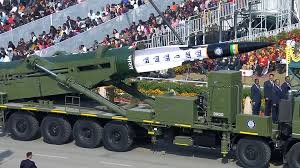
The Long-Range Anti-Ship Missile or LR-AShM is a testament to that. Indian rocket technology is probably one of the most underrated achievements. Not only has the country mastered its missile tech to an art form, it has been done so much that now the armed forces are spoiled for choices when it comes to executing a mission. Operation Sindoor was a brutal display of it. However, Naval warfare is a bit more complex. Over land, approaches are easy, high traffic close to ground can cause information to be lost, add jamming and terrain masking, you have closer approaches and then your weapon can follow the same principles all the way to the target, over open oceans, there isn’t much to hide behind, no terrain masking and depending upon the area, maybe not even air traffic to hide in the clutter. The only way to hit a ship in light of modern air-defence is to be fast or unpredictable. Preferably both.
Legacy subsonic Anti-ship missiles like Exocet and the Russian Kh-35E missiles are proven legacy systems but they are increasingly obsolete in light of AD systems reaching ranges exceeding their own, meaning the plane carrying them can be shot down before they even launch. Missiles like Kalibr are a good option, they achieve supersonic speeds in their terminal phase making interception hard, but given the nature of carrier formations, another ship in the CBG or and AEW is likely to spot it further away. Tip of the spear becomes Brahmos. Air launched missiles can be deployed from unpredictable vectors and fly in the higher supersonic ranges virtually kissing the surface making it hide in the radar horizon to the last second. By the time a radar spots a Brahmos at the horizon, at Mach 2.8 it is spit seconds away from you and even if you manage to put a HE round from your Close in Weapons System (CWIS), it’s burning wreckage can still split a ship into two without a warhead. For context, a .50 calibre Browning Machine gun round goes somewhere around Mach 2 and that 5-inch piece of metal can take a person’s arm clean off after going through an average car, a Brahmos is an 8 meter long, approx. 1.5-2-ton (at terminal phase) chunk of metal going almost 3 times the speed of sound. What makes it worse for anyone at the angry end of a Brahmos is that it is not a ballistic missile and so it performs manoeuvres and therefore does not have a predictable path.
However, Brahmos is still a huge missile and can only be launched from a Su-30 MKI, and only one per aircraft, not the best odds for a an integrated CBG. The solution then comes in Ballistic missiles. Land launched, no limit on range, weight or payload and missiles like the Agni series can hit Mach 24. However, they come with their own problems, launching a ballistic missile might be taken as a sign of a nuclear escalation which is not a risk worth taking in most cases, even if not, ballistic trajectories have two drawbacks, one, they are a predictable parabola, hence ballistic, second, since they go out to space or at least very high altitudes, they show up on the radar horizon pretty early giving the enemy time to prepare and intercept. While India does have systems in that category, the LRAShM is a whole other beast.
It does not fly at the blistering speeds of your garden variety IRBM. But it also does not fly as high. So, it does not show up on the radar till much later, but it still flies at hypersonic speeds which gives an even shorter reaction time. But that is not the coup de grace. This missile has a glide vehicle which is essentially a small plane going Mach 5 and actively performing complex manoeuvres and conducting counter electronic warfare wile tracking and engaging moving targets. To top that, it is safe to assume at Mach 5, the heat ionises air into a layer of plasma which interferes with radar signals and can throw off radar signals. Finally, it has demonstrated a range of 1500 km and that is what is known, as always. Consider that it is being integrated into a ship launched variant and the fact that India has a base in Andaman and Nicobar Islands, simply put, demonstrating this missile on 26th January parade was more than “aura farming” for India. It was a message to EU, India is not only an upcoming power but a formidable military bastion and a protector of the jugular of global trade, the IOR.