


The United States National Security Strategy increasingly emphasizes burden sharing among allies. This approach reflects a long term shift in American grand strategy in which regional partners are encouraged to assume greater responsibility for maintaining order in their respective spheres. In the Middle East, this logic suggests that Washington prefers capable allies to act as stabilizing powers while the United States reduces direct military exposure without fully withdrawing from the region.
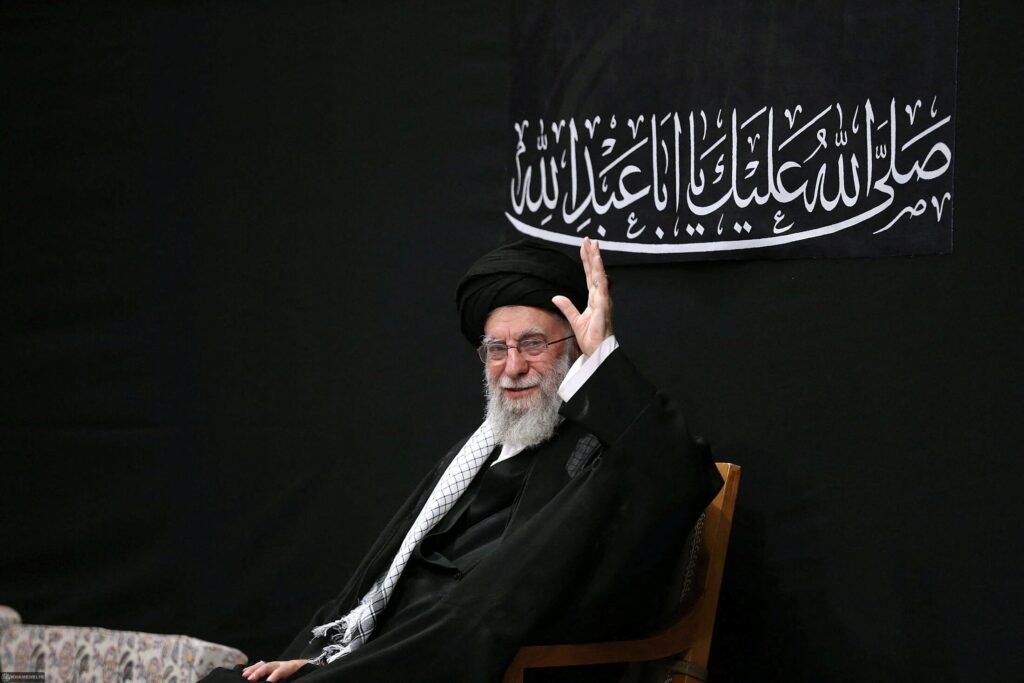
Within this framework, Israel emerges as a central security partner. The normalization agreements negotiated under President Donald Trump through the Abraham Accords strengthened Israel’s ties with several Sunni Arab states. These agreements aligned Israel more openly with countries such as United Arab Emirates, Bahrain, and Qatar against shared concerns regarding Iran. Iran represents a pivotal actor in this regional equation. As a Shia Islamic republic with significant oil reserves and control over strategic maritime choke points, it occupies a geostrategic position of considerable importance. Its alignment with both Russia and China reinforces its role within a broader axis that challenges Western influence. Tehran’s pursuit of advanced nuclear capabilities is shaped by a strategic doctrine rooted in historical experience, particularly the belief that sovereignty and regime survival are best protected through credible deterrence.
For Israel, however, Iran’s nuclear ambitions represent an existential concern. Preventing Iran from acquiring a nuclear weapon remains central to Israeli security doctrine. This objective also aligns with the security interests of Gulf states that perceive Iranian regional influence as destabilizing. While Israel enjoys strong support in Washington, this relationship is grounded in a combination of strategic alignment, shared democratic values, defense cooperation, and domestic political dynamics within the United States.
Turkey adds another layer of complexity. Under President Recep Tayyip Erdogan, Ankara has pursued a more assertive foreign policy that seeks to expand its influence across former Ottoman territories. Although Turkey is a NATO member, its ambitions occasionally place it at odds with both Western partners and regional actors.
The potential weakening or transformation of the Iranian regime would have far reaching geopolitical consequences. From a United States and Israeli perspective, a less hostile Iran could reduce security threats and potentially limit the flow of Iranian oil to China. For Beijing, Iran represents both an energy supplier and a strategic partner within its broader Eurasian strategy. China faces a structural dilemma. Non intervention risks strategic losses in energy security and regional influence, yet overt military involvement could trigger direct confrontation with Western powers. Although China has expanded renewable energy partnerships with European states, these initiatives do not fully eliminate its vulnerability to disruptions in Middle Eastern energy flows.
India’s position reflects a more cautious strategy. As a major power with complex domestic dynamics in the Indian Ocean region, New Delhi often adopts strategic silence in volatile situations. Public statements on sensitive developments in Iran could carry internal security implications. At the same time, India balances multiple priorities, including relations with Western partners, regional stability in South Asia.
The current regional tensions are unlikely to escalate into a global conflict unless major powers such as Russia or China formally commit military forces in direct confrontation with the Western alliance. Absence of such escalation, the struggle remains primarily a contest for influence and dominance within the Middle East. It is a competition shaped by deterrence, energy security, alliance structures, and shifting balances of power rather than an imminent slide toward World War 3.