

Edit Content

SECTIONS

PLATFORMS

CONTACT US
Mail: contact@geopolitical.in

Edit Content

SECTIONS

PLATFORMS

CONTACT US
Mail: contact@geopolitical.in

Edit Content

SECTIONS

PLATFORMS

CONTACT US
Mail: contact@geopolitical.in

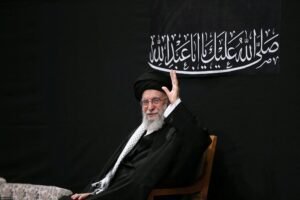
Converging U.S. and Israeli Interests in the Middle East: How Iran Shapes the Game

Iran, Israel, and the United States are locked in a high stakes contest that will shape the balance of power in the Middle East. Iran’s nuclear trajectory and regional network of influence directly challenge Israeli security doctrine and American strategic interests.
Washington’s burden sharing approach increasingly relies on allied capacity, while China and Russia monitor developments with calibrated caution.
Absence of direct great power military intervention, the conflict remains a controlled struggle for regional dominance rather than a precursor to global war.
Read More »

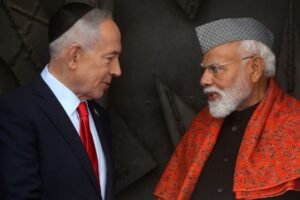
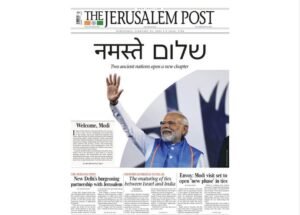
A concise brief on Prime Minister Narendra Modi’s address to the Knesset, Israel 2026

Prime Minister Narendra Modi, addressing the Knesset in 2026, reaffirmed India’s uncompromising stance of zero tolerance against terrorism, equating the 26/11 Mumbai attacks with the October 7 attacks in Israel. He emphasized that terrorism cannot be justified in any form and called for unified global action. Highlighting centuries-old civilizational ties, he noted the deep historical and cultural bonds between India and Israel. He praised Israel’s leadership in innovation, agriculture, and technology, and underscored expanding strategic cooperation. He concluded by describing the partnership as mutually beneficial, rooted in shared values, democratic principles, and a common vision for peace and stability.

Read More »

Mahashivaratri: astronomical timing, seasonal transition and symbolic encoding in Hindu thought

Mahashivratri is celebrated during the final waning phase of the Moon, immediately preceding solar-lunar conjunction (New Moon). This phase corresponds to minimal lunar illumination and reflects systematic monitoring of the synodic month within the Hindu calendrical framework. The festival celebrated in late winter aligns lunar phase calculation with seasonal transition in the Indian subcontinent.
The observance therefore demonstrates co-ordinated tracking of lunar elongation, solar position and environmental cycles.
Mahashivaratri thus exemplifies the integration of astronomical measurement and ritual timekeeping through celebrations and community gatherings.

Read More »

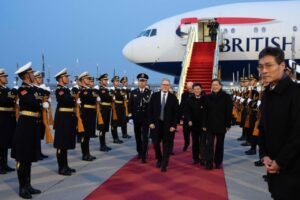
Drifting America’s European allies towards Chinese camaraderie

What appears to many critics as contradiction or appeasement is better understood as strategic adaptation under conditions of systemic transition. As American power becomes more domestically constrained and politically unpredictable, middle and allied powers are no longer treating U.S. leadership as an immovable constant. Instead, they are diversifying economic ties, reopening channels with rival great powers, and quietly insulating themselves from the risk of entrapment in future conflicts. This behaviour is not ideological drift, nor is it a repudiation of Western values. It is a rational response to shifting power realities one that aligns closely with classic theories of bandwagoning when resistance appears costly and long-term certainty elusive.

Read More »

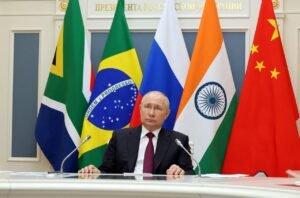
Envisioning BRICS Nations fintech integration

As global financial fragmentation accelerates, BRICS is increasingly positioned to move from political co-ordination toward systemic economic architecture. Anticipating a BRICS fintech framework is therefore not an exercise in speculation but in strategic foresight. The convergence of digital public infrastructure state backed payment systems and growing demand for monetary autonomy creates conditions for a parallel financial ecosystem to emerge. While not designed to replace existing global systems such an architecture would expand strategic choice reduce external vulnerability and reshape how emerging economies transact govern and project economic power.

Read More »

The case for security by design in Artificial Intelligence

Quantum breakthroughs could break the cryptographic systems that protect AI models, data pipelines and authentication mechanisms. Even well designed AI systems could be compromised at a large scale. Security by design can avoid systemic risks that may otherwise be irreversible and harness AI’s potential safely and responsibly.

Read More »

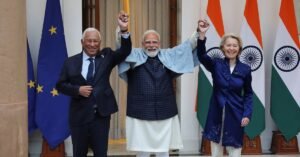
India-EU Free Trade Agreement: A Strategic Analysis

An India-EU partnership represents a convergence of economic scale, strategic autonomy, technological cooperation, and climate ambition. Rather than a transactional trade agreement, it constitutes a long-term strategic alignment capable of reshaping global supply chains, strengthening economic resilience, and reinforcing a multipolar, rules-based international order.

Read More »

What happens in Davos never stays in Davos, it shapes the New World Order

As the global energy and industrial base shifts, so too does the geography of power. Asia’s rise is driven less by ideology than by human capital, scale, logistics, and manufacturability.
Europe is repositioning itself as a partner in that growth rather than a bystander to it. The emerging world order is not hegemonic but unmistakably multipolar.

Read More »

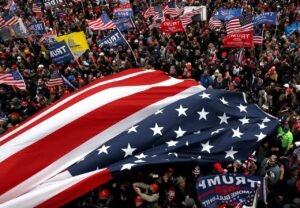
The American political culture : deep state, divisions, and democracy

American power operates through overlapping networks of lobbies, corporate interests, and state institutions rather than a single unified authority. Media driven polarization has hardened cultural and class divisions, reshaping how citizens interpret national identity and global engagement. Both major parties increasingly converge on viewing China as the primary strategic challenger, even as they differ in tone and method. Competing perceptions of decline or resurgence reflect the observer’s position more than objective reality. Whether the United States adapts successfully will determine its role in a rapidly shifting global order.

Read More »