


Edit Content

SECTIONS

PLATFORMS

CONTACT US
Mail: contact@geopolitical.in

Edit Content

SECTIONS

PLATFORMS

CONTACT US
Mail: contact@geopolitical.in

Edit Content

SECTIONS

PLATFORMS

CONTACT US
Mail: contact@geopolitical.in

Indian space economy: strategic and geopolitical dimensions: an overview

India has a long tradition of knowledge in astronomy and metaphysics, reflecting a deep understanding of the cosmos. Modern satellites and remote sensing now provide critical data for agriculture, disaster response, climate monitoring, and defence. Artificial intelligence and machine learning enhance precision and actionable insights across these sectors. Space based technologies drive economic growth and create high skill analytics and engineering jobs. Together, these capabilities strengthen innovation, resilience, sustainable development, national security and informed geopolitical decision making.


Read More »

Steering through the Armageddon of conscience with the Buddha

In a world where facts are contested and belief spreads faster than evidence, moral awareness declines. Technology accelerates information and influence, but often at the cost of intentional judgment. Pleasure and power concentrate while responsibility is dispersed, creating widespread ethical fatigue. Buddhism provides a framework for mindful decision-making, ethical responsibility, and restraint. Ultimately, the future will be determined not by our machines, but by how consciously we act.

Read More »

Why South Asia’s greatest security failure is a missing story?

South Asia’s greatest security weakness is not a lack of military capability, but the absence of a shared story. While other regions have turned history, trauma, and ideals into strategic soft power, South Asia remains trapped in competing national narratives. This fragmentation erodes trust, weakens cooperation, and leaves the region vulnerable to external influence.
Soft power shapes alliances, legitimacy, and stability more enduringly than force alone. Until South Asia learns to articulate a collective vision, it will continue to underperform on the global stage.

Read More »

BRICS and political economy perspectives

BRICS offers India a platform to enhance economic resilience and strategic autonomy in a multipolar world. From a political economy perspective, engagement balances markets and state intervention, echoing John Locke’s ideas of limited governance fostering growth. Offensive realism, as theorized by John Mearsheimer and middle power politics explains India’s cautious hedging against great powers while maximizing influence. The Modi government has actively pursued this strategy, deepening ties with BRICS members to reduce dependence and expand global partnerships. By combining economic liberalization with strategic assertiveness, India seeks both development and security in an uncertain international system.

Read More »

Indian foreign policy and the Mahabharat: Lessons through parallels

India stands on a modern Kurukshetra, where rival powers vie for supremacy.
Like the Kauravas and Pandavas, global powers seek her allegiance. She invokes the wisdom of Shri Krishna, choosing strategy over partisanship. The diaspora, vast and scattered, is her Narayani Sena. India is the charioteer, guiding her destiny with foresight and balance. Her strategic partnerships are measured, safeguarding sovereignty and responsibility. In this battlefield, India acts not for conquest, but to preserve the world from extremes.

Read More »

Politics in the Arctic

China’s quest for secure transit routes faces persistent challenges across the globe. Key corridors, whether the Suez Canal, CPEC, or the Arctic, are complicated by territorial disputes, geopolitical rivalries, and strategic chokepoints. Some obstacles arise from the interests of other powers, such as the U.S. and its allies, while others are dictated by geography or international law. These vulnerabilities highlight China’s dependence on stable and open trade routes. While not every challenge is a deliberate blockade, the cumulative effect constrains China’s global ambitions.

Read More »

US-China and the question of world order

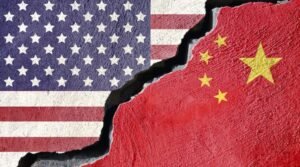
Competition for global hegemony is shaped by energy security, access to resources, critical new age technology, markets, hard power, and soft power. The world is undergoing a transitional period marked by turbulence and uncertainty.

Read More »

CPEC: Pakistan’s strategic miscalculation

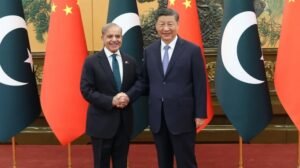
CPEC has been framed as a catalyst for inclusive growth and structural transformation in Pakistan. However empirical assessments indicate that the distribution of economic gains remains asymmetrical with limited spillovers for local industry and employment. The financing structure and contractual arrangements have increased Pakistan’s fiscal and balance of payments vulnerabilities. Consequently the initiative reflects a strategic alignment that prioritizes Chinese economic and geopolitical interests over sustainable development of Pakistan.

Read More »

Europe in the crosscurrents of global competition

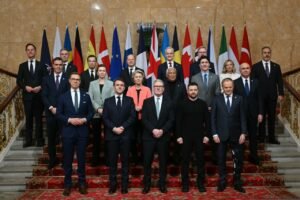
As power shifts from battlefields to markets and influence, unilateral U.S. moves are testing the limits of the transatlantic order. Europe’s paralysis is amplified as internal divisions deepen, leaving the continent reactive rather than proactive. Long-standing norms of consultation and collective decision-making are giving way to unilateral actions and transactional deals. The result is a Europe exposed and vulnerable, struggling to assert its role in a rapidly fragmenting, multipolar world, where influence, economic leverage, and strategic positioning have become the new measures of power.

Read More »

Knowledge resilience in the age of weaponised information

Gen Z is the main component of an orchestrated disinformation warfare by intelligence agencies, because when they lack in knowledge and discernment capabilities, they attach themselves subjectively given their identity rather objectively observing internet information and end up acting as agents of chaos destabilising the country and unintentionally sabotaging the sovereignty and integrity of the nation.

Read More »