

Edit Content

SECTIONS

PLATFORMS

CONTACT US
Mail: contact@geopolitical.in

Edit Content

SECTIONS

PLATFORMS

CONTACT US
Mail: contact@geopolitical.in

Edit Content

SECTIONS

PLATFORMS

CONTACT US
Mail: contact@geopolitical.in

Politics in the Arctic

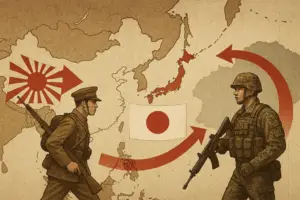
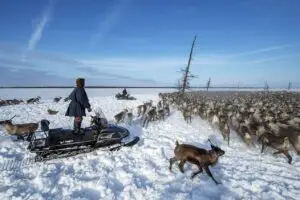
China’s quest for secure transit routes faces persistent challenges across the globe. Key corridors, whether the Suez Canal, CPEC, or the Arctic, are complicated by territorial disputes, geopolitical rivalries, and strategic chokepoints. Some obstacles arise from the interests of other powers, such as the U.S. and its allies, while others are dictated by geography or international law. These vulnerabilities highlight China’s dependence on stable and open trade routes. While not every challenge is a deliberate blockade, the cumulative effect constrains China’s global ambitions.
Read More »

US-China and the question of world order

Competition for global hegemony is shaped by energy security, access to resources, critical new age technology, markets, hard power, and soft power. The world is undergoing a transitional period marked by turbulence and uncertainty.

Read More »

CPEC: Pakistan’s strategic miscalculation

CPEC has been framed as a catalyst for inclusive growth and structural transformation in Pakistan. However empirical assessments indicate that the distribution of economic gains remains asymmetrical with limited spillovers for local industry and employment. The financing structure and contractual arrangements have increased Pakistan’s fiscal and balance of payments vulnerabilities. Consequently the initiative reflects a strategic alignment that prioritizes Chinese economic and geopolitical interests over sustainable development of Pakistan.

Read More »

Europe in the crosscurrents of global competition

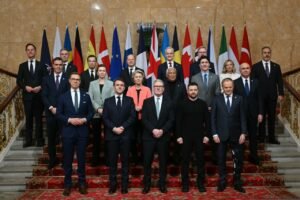
As power shifts from battlefields to markets and influence, unilateral U.S. moves are testing the limits of the transatlantic order. Europe’s paralysis is amplified as internal divisions deepen, leaving the continent reactive rather than proactive. Long-standing norms of consultation and collective decision-making are giving way to unilateral actions and transactional deals. The result is a Europe exposed and vulnerable, struggling to assert its role in a rapidly fragmenting, multipolar world, where influence, economic leverage, and strategic positioning have become the new measures of power.

Read More »

Knowledge resilience in the age of weaponised information

Gen Z is the main component of an orchestrated disinformation warfare by intelligence agencies, because when they lack in knowledge and discernment capabilities, they attach themselves subjectively given their identity rather objectively observing internet information and end up acting as agents of chaos destabilising the country and unintentionally sabotaging the sovereignty and integrity of the nation.

Read More »

The Iran regime remains unhinged

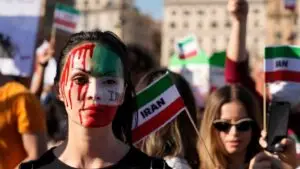
The Iranian case is a story where external normative rhetoric and hybrid pressure mechanisms fail to produce regime change due to regime resilience, elite cohesion, and strategic cost constraints.

Read More »

The collapse of international law and the end of plausible deniability

In the Arthashastra, written by Kautilya in the 4th century BCE, the concept of Matsya Nyaya warns that in the absence of just governance, anarchy prevails, morality collapses, and power supplants justice. Today’s international system increasingly reflects this condition, where might, rather than law, determines outcomes.

Read More »