



The world is changing at a breakneck speed. New world order will be led by economies ahead in innovation and manufacturing artificial intelligence, machine learning, sustainable renewable fuels industry, digital infrastructure and other critical emerging technologies. Research and development in space, health, defence and agricultural engineering, biotechnology, quantum computing are high priority sectors, The foundations of these advancements lie in the export led semiconductor industry.
China’s 15th Five Year plan emphasises upon technological self-reliance to transit into an advanced innovation led economy from a traditional labour based industrial manufacturing to automated digitised modern services and enhance global competitiveness.
While the United States is dominant in science and technological advancement the recent underinvestment in federal funding might result into gradual erosion.
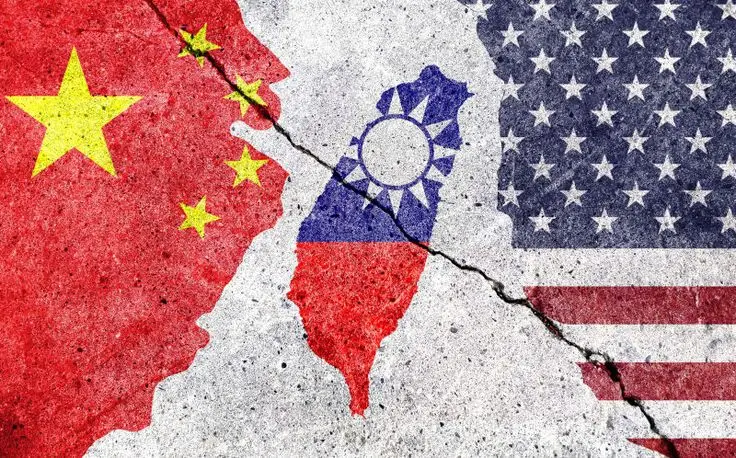
The tech race between China and United States imposes critical geopolitical conflict flashpoint around Taiwan between 2026-2030 due to its advanced semiconductor manufacturing and supply chain ecosystem. “Justice Mission 2025” recently carried out in the Taiwan Strait in north, southwest, southeast, and east of Taiwan by PLA’s eastern theatre command involving Army, Navy, Air Force and Rocket Forces said to be strategic necessity to safeguard territorial integrity is seen as Chinese State aggression and war games by Taiwan’s Democratic Progressive Party, under whose leadership the Unites States has dispatched $11 billion arms package for Taiwan to build a deterrence against China.
Any conflict would blockade trade and the exports of semiconductors to the Global tech market. There are no ambiguities about a possible conflict as Japan plans to re-militaries stating it is a survival threatening situation,
Meanwhile India has started fostering her own semiconductor ecosystem under India semiconductor mission, the Indian cabinet approved four more manufacturing units worth 4600 Cr at Odisha, Punjab and Andhra Pradesh while six already approved along with design infrastructure support provided by Government to 278 academic institutions and 72 start-ups, along with The National Policy on Electronics 2019 India prepares for self-reliance and technological leadership in semiconductor design sector.
While the existing semiconductor ecosystem faces difficulties in Taiwan, India represents opportunities in terms of investments in wafer fabrication facilities in the country to strengthen the electronics manufacturing ecosystem and help establish a trusted value chain. Global partners with India are Applied Materials, Lam Research, Micron, Intel, AMD, Nvidia, Samsung, and NXP Semiconductors, many have R&D presence in the country. As supply chains are diversifying in the wake of Taiwan conflict, India is an emerging prominent viable alternative platform for semiconductor, design, manufacturing and allied industries.