

History classes include chapters on human migrations beyond immediate geography, driven by economic purposes and the search for resources. Emperors and empires expanded their spheres of influence, geopolitics is perhaps as old as human cerebral evolution itself. Scholars of International Relations have theorized it in modern times as Realism Theory. The historical phase of European expansion dates back to the period when the roads through Constantinople were blocked by the Turks, prompting Portuguese maritime expeditions to discover new sea routes and via the Cape of Good Hope they came to towards some of the most blessed and fertile geographies on Earth in search of black pepper, silk and other precious products.
How much has the world really changed?
Geographically, it has not changed, it was emphasized by Rear Admiral Alfred Thayer Mahan (American naval officer and strategist) “Whoever controls the warm waters of the Indian Ocean, will control the World”.
Technologically, it has changed drastically. In this context, trade routes themselves have not fundamentally shifted but have evolved, yet the important main choke points remain the same, the means to secure and sustain them, even for the last village in west have transformed. Conflicts have evolved, but the regions in which they occur largely remain the same.
The Middle East is more than just a region, if we apply an analogy from Occidental literature, where the story and themes were portrayed as a dark forest that must be crossed to save the Princess, this was not merely folklore, it was a lived reality for traders of the past and remains a lived challenge for today’s intelligence agencies.
How is India managing conflicting interests and rivalries among its partner countries?
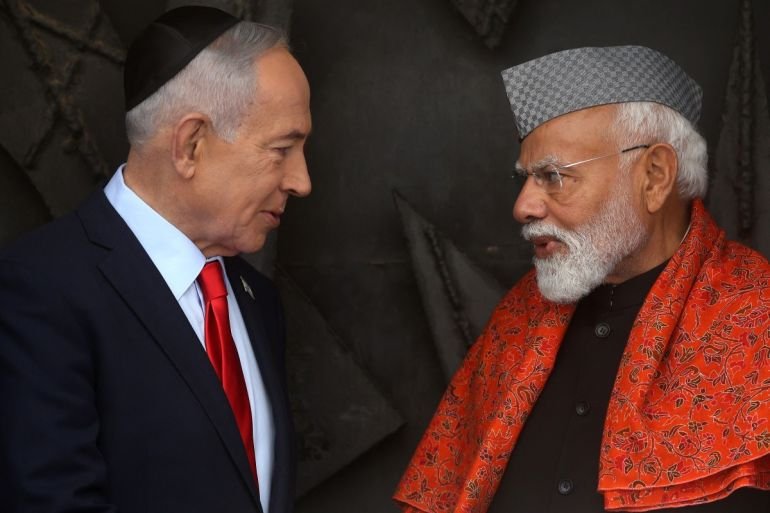
The Indian Prime Minister has emphasized initiatives such as I2U2 and IMEEC, while India has already signed bilateral trade agreements with the UAE and the EU and is working towards an FTA with Israel, alongside many other free trade agreements already signed or under negotiation. While many experts argue that the world stands at the edge of an uncertain and turbulent future, India’s foreign policy continues to emphasize non-alignment evolved given the contemporary global dynamics into multi – alignment and strategic autonomy by expanding and diversifying its bilateral partnerships.
This approach, often compared to the neutrality practiced by Switzerland during the World Wars, that seek to preserve flexibility in a polarized global order.
However, the practicality of such strategic balancing becomes more complex when India confronts persistent cross-border terrorism, particularly from proxies operating out of Pakistan, with China’s diplomatic shielding of Pakistan in certain multilateral forums complicating counterterror efforts. In such circumstances, pure neutrality can appear less like strategy and more like a mirage.
At a time when global tensions from disputes in Europe and the deteriorated relationship between Iran and the United States continue to reshape international politics, the underlying message across regions remains consistent. The ongoing friction between Pakistan and Afghanistan further reinforces the reality, states that shelter or enable destabilizing proxies against a democratic nation should expect a punch in proportion. History also reminds us that the geography of conflict and deterrence frequently follows the contours of trade and strategic corridors.