

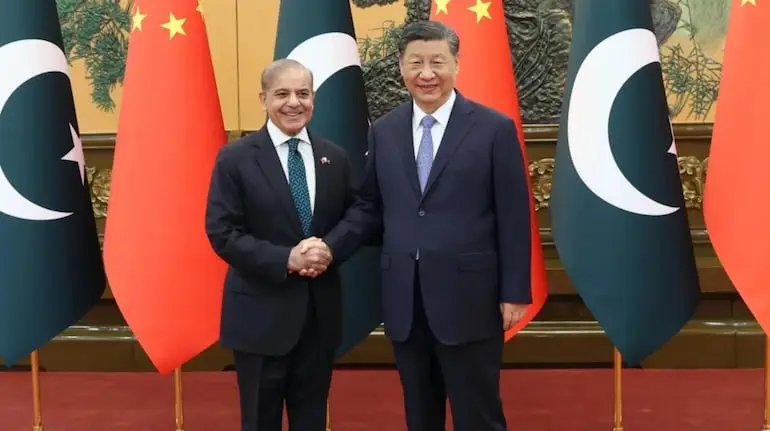
The China-Pakistan Economic Corridor (CPEC) has been projected to the Pakistani public as a transformational initiative one that would usher in prosperity, infrastructure development, employment, and regional integration. Branded and marketed as a “game changer,” CPEC was supposed to lift Pakistan out of chronic economic stagnation and bridge long-standing regional inequalities. However, a closer examination reveals that this is largely a myth. In reality, CPEC is strategically designed to serve China’s economic and energy security interests far more than it addresses the development needs of Pakistan or its marginalized populations.
At its core, CPEC is not a development project it is a geopolitical and strategic corridor. Its primary value lies in providing China with direct access to the Indian Ocean through Pakistan’s Gwadar Port. Gwadar is located merely 400 kilometres from the Strait of Hormuz, one of the most critical maritime chokepoints for global oil supplies. Through CPEC, China can potentially reduce its oil transportation distance from approximately 12,000 kilometers from the South China Sea and the Strait of Malacca to just about 3,000 kilometres.
This shift is crucial for Beijing. Nearly 80% of China’s oil imports currently pass through the Malacca Strait, a vulnerability often referred to as China’s “Malacca Dilemma.” The Strait is increasingly contested and monitored by other powers, including the United States, Japan, and India. Meanwhile, China faces growing pressure in the South and East China Seas, where territorial claims are disputed by countries such as the Philippines and Vietnam. The 2016 international tribunal ruling against China in the South China Sea further intensified Beijing’s urgency to secure alternative trade and energy routes despite China’s outright rejection of the verdict.
Seen in this context, CPEC is best understood as a strategic bypass, enabling China to minimize its exposure to contested maritime routes and enhance its energy security. Pakistan, in this equation, is not a beneficiary but a transit state.
Although Gwadar Port is often presented as a symbol of Pakistan’s future prosperity, its control and operational structure raise serious concerns. Managed by Chinese companies, the port’s development has largely excluded local communities. Promised employment opportunities, infrastructure, and social uplift for the people of Balochistan remain minimal, while fears of demographic change and economic marginalization continue to grow.
Instead of becoming stakeholders, locals increasingly perceive themselves as outsiders in their own land. The absence of meaningful local participation suggests that Gwadar is being developed for external strategic interests rather than national or provincial welfare.
Gilgit-Baltistan, the geographical entry point of CPEC into Pakistan, exemplifies the deep structural inequities embedded in the project. Despite its strategic importance, the region has received little economic benefit or political recognition. The people of Gilgit-Baltistan lack constitutional status, decision-making power, and equitable access to CPEC-related investments.
Infrastructure projects pass through the region, yet the population remains deprived of basic services, employment opportunities, and revenue sharing which translates into depravity and poverty. This exclusion highlights a broader pattern, CPEC’s benefits are centralized, while it costs environmental degradation, displacement, and security risks are localized to be borne by the common people of Pakistan.
CPEC lies in Pakistan’s internal resource distribution framework. Federal allocations are largely based on population size rather than indicators such as poverty, backwardness, or regional deprivation. As a result, larger provinces disproportionately benefit, while smaller and less developed regions like Balochistan and Gilgit-Baltistan are sidelined, this is a structural inequality, which is further deepened by the CPEC.
Perhaps the most alarming aspect of CPEC is the lack of transparency. Key agreements, financial terms, and long-term liabilities remain undisclosed. Repeated demands by political parties, civil society, and regional representatives to make CPEC agreements public have largely been ignored.
This secrecy undermines democratic accountability and raises serious concerns about debt sustainability, sovereignty, and long-term economic dependence. Without transparency, claims of “win-win cooperation” remain hollow slogans rather than verifiable realities. With the haunting question that this project reduces Pakistan into a Chinese satellite state, compromising it’s sovereignty.
Despite grand promises, CPEC has failed to meaningfully uplift Pakistan’s minorities, smaller provinces, or economically marginalized populations. Instead, it aligns seamlessly with China’s strategic priorities: securing energy routes, reducing maritime vulnerability, and expanding geopolitical influence in the Indian Ocean region.
For Pakistan, the benefits remain uneven, uncertain, and largely unrealized. CPEC risks becoming yet another example of elite-driven policymaking where national rhetoric masks regional exclusion and foreign strategic dominance. CPEC reveals a troubling imbalance. It serves China’s economic and energy security far more than Pakistan’s development needs.