

China’s rise toward global influence has not been loud, ideological, or revolutionary, Instead, it has been deliberate, transactional, planned and patient. The BRI (Belt and Road initiative) is the clearest manifestation of this approach. Framed as infrastructure development and connectivity, the BRI has largely translated into loans, bonds, and long-term debt arrangements in exchange for ports, land access, logistics hubs, and strategic infrastructure. From Central Asia to Africa and deep into Latin America, China has steadily expanded its economic and political footprint often in regions where the Atlantic system either failed to penetrate or chose to disengage.
These regions were not accidental choices. Much of the Global South particularly Latin America is rich in minerals, energy, and strategic geography but relatively untapped by Western capital beyond extractive or short-term interests. China entered these spaces cautiously, building economic dependencies. For years, Beijing avoided overt confrontation with the United States in what Washington has traditionally regarded as its backyard. Instead, China embedded itself through trade, infrastructure, and finance, allowing influence to accumulate quietly rather than explosively.
This balance is now fraying. Global attention had been diverted for years first by the Russia-Ukraine war, then by the Israel-Gaza crisis allowing China a relatively calm strategic environment. But recent developments have pulled U.S.-China competition back into the foreground. The renewed American focus on Venezuela, particularly the aggressive posture toward Nicolás Maduro, was not merely about democracy or regional stability. It was also about energy and denial. Venezuela holds the world’s largest proven oil reserves, and Washington is acutely aware that such reserves if fully aligned with Beijing could materially support China’s long-term growth and energy security. Preventing adversaries from fuelling China’s rise has become as important as promoting American supply. Venezuela’s oil become a subtle yet significant vector in the global push toward de-dollarization. Caracas increasingly bypassed the U.S. dollar in its transactions, settling oil trade in yuan, euros, and even digital currencies. By doing so, Venezuela not only tried to insulate itself from American sanctions but also tried to contributes to the creation of alternative financial and energy channels that weaken the dollar’s dominance in global oil markets. This shift aligns closely with China’s broader strategy of promoting yuan-denominated trade and establishing parallel financial systems within BRICS and Belt and Road partners. In effect, Venezuelan crude is no longer just a commodity it is a tool in a quiet, strategic reordering of global finance, signalling that if major energy flows and operate outside the petrodollar system, it challenges decades of U.S.-centric economic leverage.
This logic extends beyond Latin America. Greenland’s mineral wealth especially rare earth elements critical for future technologies has elevated it from a frozen periphery to a strategic asset. Donald Trump’s blunt warnings and rhetoric about acquiring Greenland may have sounded erratic, but the underlying concern for United States was real, control over future-defining resources. These moves unsettled NATO allies and exposed deeper fractures within the Western alliance. Under Trump, the United States became increasingly focused on China above all else, shedding or deprioritizing other commitments that no longer served this primary rivalry.
Iran, too, sits closer to the spotlight than ever. Its proximity to China through energy cooperation and long-term strategic agreements makes it a crucial node in Beijing’s effort to diversify supply and reduce vulnerability to U.S. pressure. Chinese global ambitions rest heavily on energy security and safe transit routes. The South China Sea remains heavily militarized and contested precisely because it is central to these concerns. Meanwhile, overland alternatives such as the China-Pakistan Economic Corridor, once imagined as strategic breakthroughs, have proven costly, unstable, and politically fraught less an escape route than a gamble through persistent insecurity.
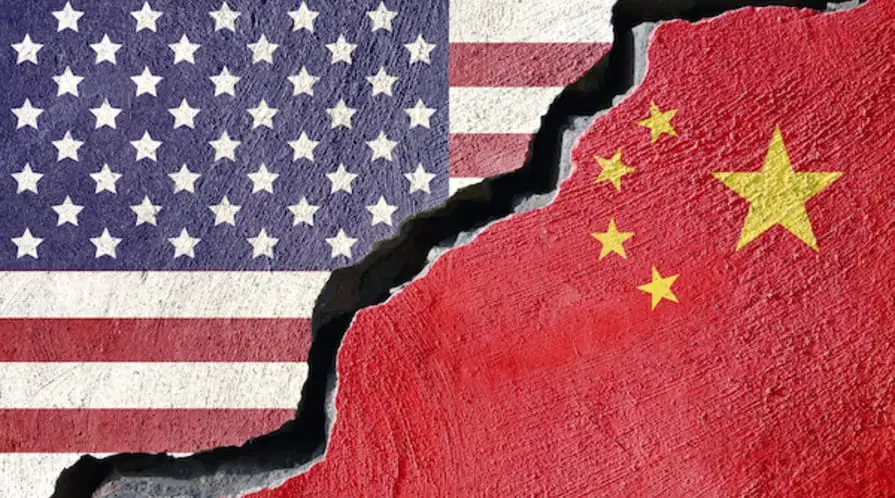
What is increasingly clear is that U.S.-China competition is entering a sharper phase. Washington’s strategy is no longer just about competing with China, but about containing it, choking access to oil, minerals, finance, and transit routes wherever possible. Beijing, by contrast, continues to think in longer cycles. It is strengthening bilateral ties with major European states, deepening its role within BRICS, and quietly building parallel financial and institutional systems that reduce dependence on Western frameworks. These efforts are not dramatic; they are cumulative.
China’s path to hegemony, if it can be called that, does not resemble a march or a declaration. It looks more like a slow redirection of global gravity away from a single centre and toward a fragmented, competitive multipolar world. The United States is trying to arrest this shift by forceful containment and resource denial. China is responding by building alternatives. The outcome remains uncertain, but the trajectory is unmistakable: the struggle is no longer about dominance alone, but about who defines the rules, routes, and resources of the future. However, The United States is actively working to contain China’s rise by tightening control over critical technology and rare-earth exports, enforcing sanctions and restrictions on countries like Venezuela and Iran to block Chinese access to energy and resources, strengthening military presence in the Indo-Pacific and South China Sea to secure key maritime routes, and forging strategic alliances with Europe, Japan, and India to counter China’s economic and geopolitical influence. Yet many more events await before multipolarity is truly defined.