

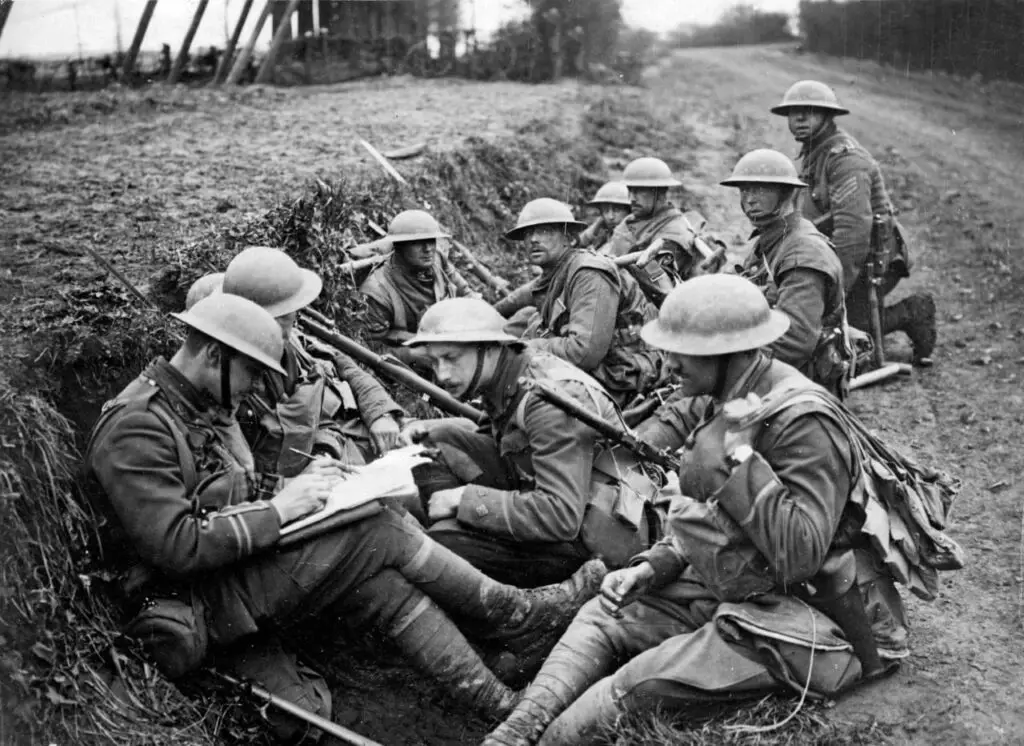
The world before 1914 was already in crisis. European colonial empires had devastated indigenous societies across the globe, while within Europe itself, imperial powers were locked in intense competition for influence, territory and prestige. German monarch Kaiser Wilhelm backed the Habsburg monarchy with a ‘blank cheque’ against Serbian nationalism. Britain presided over a global empire marred by voices of independence and freedom struggle. France after a long oscillation between political revolutions and restorations, united and was stable. The Russian Tsar Nicholas Romanov positioned as Serbia’s protector concerning Slavic heritage.
The eventual assassination of Archduke Franz Ferdinand did not cause the First World War. It exposed a system already primed for collapse.
In 2026, the global system once again appears dangerously unstable. The difference lies in scale and speed. Nearly the entire world is connected through digital platforms, consuming events in real time. The United States has intensified political and economic pressure in Venezuela. President Donald Trump has stated that Greenland is vital for American national security, prompting Denmark’s Prime Minister Mette Frederiksen to warn that such a move could undermine NATO cohesion. The British Prime Minister Keir Starmer and The French President Emmanuel Macron have expressed support for Denmark.
Russia has intensified strikes in Ukraine. Israel’s military operations in Gaza continue without a clear political resolution, while protests challenge Iran’s clerical regime. Russian officials have made ambiguous statements about strategic co-operation with Iran. China reiterates its claims over Taiwan. India continues to confront the unresolved geopolitical consequences of the 1947 partition and persistent regional instability involving Pakistan and Bangladesh.
In this environment, millions of individuals, armed with partial information and algorithmically amplified narratives, have become unwitting participants in hybrid warfare. Information itself has become a battlefield. As a result, the same question circulates relentlessly.
Has World War Three already begun?
To answer this, one must first define what constitutes a ‘World War’. Historically, a world war is not defined primarily by ideology but by scale, structure, and systemic mobilization. It involves multiple great powers engaged in sustained direct or indirect conflict across several regions, with global economic, military, and political systems oriented toward war. Neither the First nor the Second World War began with clearly defined ideological blocs. Ideology hardened during the conflicts.
By this standard, the present moment does not yet constitute a world war. Major powers are not engaged in sustained, direct military confrontation with one another across multiple theaters. Instead, the world is witnessing a dense network of proxy conflicts, economic coercion, sanctions regimes, and strategic signalling. These actions are carefully calibrated to avoid uncontrollable escalation.
What is unfolding is a transitional phase driven by a shift in the global balance of power. The United States, as the dominant power, is attempting to prevent China from surpassing it. This recalibration first appeared through trade wars and tariffs and has since expanded into strategic repositioning across multiple regions, including renewed attention to Latin America. Washington’s posture toward Venezuela reflects a broader effort to reassert influence in its traditional sphere while limiting China’s expanding economic presence.
China has articulated a consistent strategic logic. Global leadership must be preceded by regional dominance. This requires constraining potential regional rivals rather than integrating them as equals. Pressure along the Sino-Indian border and Beijing’s partnership with Pakistan align with this approach. In response, the United States has elevated India as a key Indo Pacific partner, not as a formal ally but as a strategic counterweight.
India has entrenched itself in a doctrine of ‘Strategic Autonomy’. It refuses to fully align with either Washington or Beijing, instead co-operating selectively while preserving independence. This posture is neither indecision nor passivity. It reflects a calculated effort to maximize leverage while avoiding entanglement in great power confrontation.
While China continues signalling resolve over Taiwan, the United States has moved to counter Chinese influence in Latin America, invoking a modernized interpretation of the Monroe Doctrine. The objective is no longer to exclude European powers but to prevent Chinese strategic penetration. At the same time, Washington is attempting to rebuild influence around the Atlantic and secure access to critical energy resources.
Beneath these geopolitical manoeuvres lies a structural competition over energy security, traditional fossil fuel interests are closely aligned with the (MIC) Military industrial complex and the Big Tech under MAGA politics in the United States which competes with the Renewable energy ecosystem driven by European R&D and Chinese manufacturing capacity, also for Trump administration NATO reassessment and burden sharing with European Union are strategic priorities.
Under the Republican leadership, certain objectives are more openly articulated. These include securing global energy influence and exerting pressure on Iran’s theocratic system. Could such dynamics trigger a world war three? Hypothetically yes, but highly unlikely as it would mean the annihilation of all humanity, particularly if escalation were to involve nuclear deterrence signalling, the decisions made at Moscow would define the world’s collective fate particularly if President Vladimir Putin were to back Iran’s Supreme leader, Ayatollah Ali Khamenei in the wake of covert operations around regime change efforts.
Russia’s strategic posture must be understood in parallel with Ukraine. Moscow may or may not tolerate pressure in other arenas as in Iran, but territorial outcomes in Ukraine remain central to its security calculations, Europe, constrained by military and energy dependencies, is increasingly aware of its vulnerabilities and has begun discussing strategic autonomy, echoing a path India adopted earlier.
The contemporary world is therefore best understood as being in a fragile transition toward multipolarity, driven not by ideology but by competition over resources, security, sovereignty and influence. This is not a total war but a scenario of persistent, localized conflicts through which states seek to revise historical arrangements and secure future leverage.
The international system is moving toward a multipolar configuration as relative power becomes more dispersed. Influence is increasingly exercised at regional levels rather than through a single dominant centre.
In such a system, middle powers are likely to pursue strategic autonomy to preserve flexibility and reduce dependence on any one bloc. Multipolarity creates overlapping spheres of influence, increasing coordination costs and the risk of miscalculation. Systemic stability will depend on deterrence, calibrated competition, and the ability of states to manage autonomy without escalation.
World War has not begun.
But the mechanisms that once restrained it are weaker than at any point since 1945.