

For more than two decades, Western policymakers have debated the implications of Unrestricted Warfare, the influential book by former People’s Liberation Army colonels Qiao Liang and Wang Xiangsui, Its core argument that modern conflict extends far beyond military force into economics, technology, politics, and public perception has increasingly informed strategic thinking in Washington and Brussels. Today, those ideas resonate less as theory and more as lived reality.
War is no longer a clearly defined event. Financial markets, supply chains, currencies, cyber systems, and narratives can all be weaponized. In this environment, power is exercised not only through armed force, but through coercion embedded in everyday economic and political life. The decisive arenas of competition are global markets, alliances, and institutional trust.
West is not unfamiliar with these tools. Economic sanctions, trade restrictions, and financial leverage have long been pillars of U.S. and European foreign policy. Yet what has changed is the context. Economic and strategic competition is now continuous, and alliance cohesion itself has become a central strategic variable.
Recent U.S. actions have exposed this vulnerability. The American intervention in Venezuela, followed by Donald Trump’s renewed public insistence that the United States should acquire Greenland, has generated deep unease across Europe. These moves are widely viewed not as isolated provocations, but as part of a broader pattern of unilateralism that places transactional power above alliance norms.
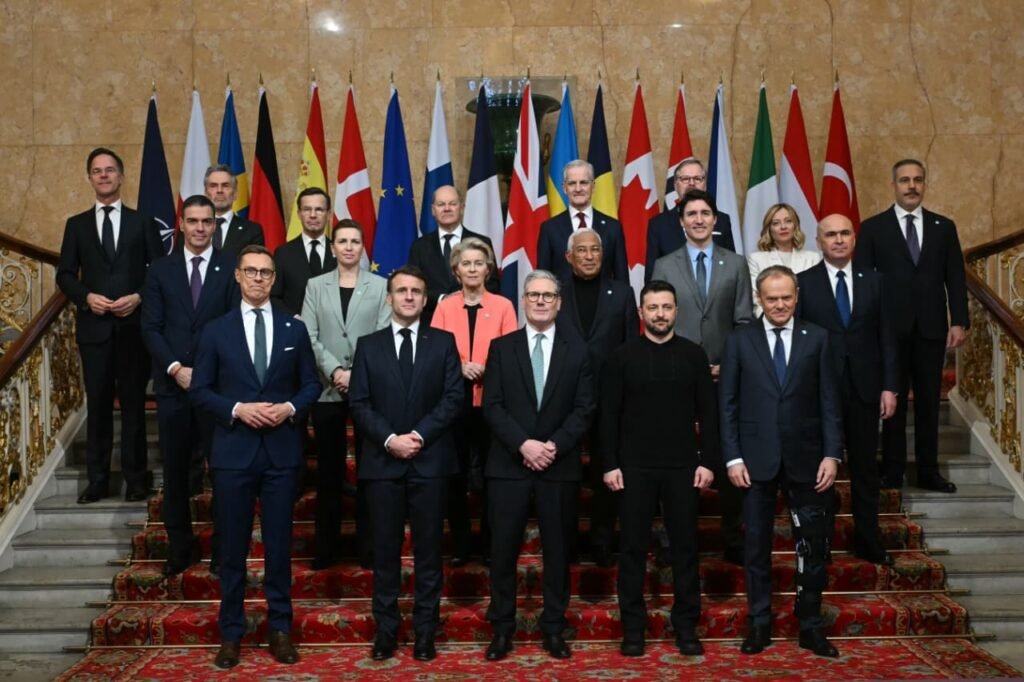
European reactions have been unusually stark. Danish leaders have warned that any attempt by the United States to seize Greenland, an autonomous territory within the Kingdom of Denmark and a NATO member, would effectively undermine the alliance itself. Such an act would strike at the principle of collective defense and mutual respect for sovereignty that has underpinned NATO since its founding. In Brussels and other European capitals, the episode has reinforced concerns about the reliability of U.S. leadership under a Trump presidency.
These concerns extend beyond Greenland. They reflect a deeper anxiety that the United States, traditionally the guarantor of the transatlantic order, may now be willing to treat allies with the same coercive logic it applies to rivals. In a strategic environment where economic pressure and political leverage are increasingly central tools, the distinction between adversary and partner becomes dangerously blurred.
Western governments have spent years warning that China and Russia seek to weaken the international order through economic leverage, influence operations, and grey zone tactics. Yet when similar methods, or the threat of them, are directed inward, the damage to Western credibility and unity is immediate. From a European perspective, this trend has accelerated debates about strategic autonomy. While EU leaders continue to emphasize NATO’s central role, there is growing recognition that dependence on U.S. political stability is itself a strategic risk economic security, supply chain resilience, and defence coordination are increasingly framed not as alternatives to the transatlantic alliance, but as safeguards against its potential erosion.
The Greenland controversy is particularly instructive. The Arctic is emerging as a region of heightened strategic competition, shaped by climate change, resource access, and geopolitical rivalry. European governments broadly accept the need for greater coordination and deterrence in the region. What they reject is unilateral action that bypasses allies and undermines the very frameworks designed to manage that competition.
At stake is not only NATO’s credibility, but the West’s ability to compete effectively in a world increasingly defined by economic and political warfare. Collective economic power remains one of the West’s greatest strengths. Fragmented, it becomes a liability.
The debates sparked by Unrestricted Warfare were never about adopting its logic wholesale, but about understanding how power is exercised in the modern era. That understanding applies as much to internal cohesion as to external rivalry. In a world where influence, markets, and norms are as decisive as military force, alliances and strategic partnerships are not merely instruments of power. They are power.
The question now confronting Europe is not whether the West faces strategic competition, but whether it can navigate that competition without turning inward on itself. If economic and political coercion become normalized within the alliance, the erosion of trust may succeed where no external adversary ever could.
In an age of “unrestricted” competition, the greatest strategic failure for the West would not be losing a conflict, but losing the alliance that once ensured it would never fight alone. Once a pillar of the transatlantic order, it now struggles to assert influence in global decision-making. Cohesion is fraying, trust in traditional partners is collapsing, and internal divisions are widening. Strategic autonomy is no longer an option but a necessity born of failure. In the race of modern power, Europe risks being sidelined while others shape the rules of the multipolar world.